


Menu:
Important Dates
Oct. 1, 2017
Sep. 11, 2017
Submission deadline
Oct. 20, 2017
Notification of Acceptance
Nov. 24, 2017
Final paper submission date
Plenary Talks
Plenary
Talk 1 (25 Jan. 2018)
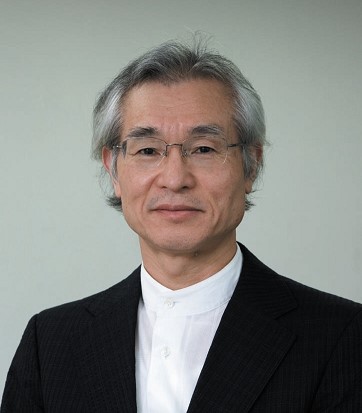 |
Mobile Communications Network Evolution and Distributed MIMO for 5G Enhanced Mobile BroadbandFumiyuki
Adachi (Specially
Appointed Prof.,Tohoku University, Japan) Specially
Appointed Professor, Research Organization of Electrical
Communication (ROEC) |
Abstract
Mobile communications network has now evolved into the 4th generation (4G). Mobile broadband services have been becoming more and more popular. Recently, the development of 5G network for providing 5G enhanced mobile broadband (eMBB) services is on-going worldwide. Since the available frequency bandwidth is limited, the area spectrum efficiency (ASE), bps/Hz/km2, has been the most important concern for the last few decades. An increasing popularity of broadband services causes a problem of increased energy consumption. Therefore, the energy efficiency (EE), bits/Joule, has also become an important concern for battery operated mobile terminals in particular. Distributed MIMO can improve both ASE and EE simultaneously.
After briefly overviewing the evolution of mobile communications network, , we will introduce the recent advances in distributed MIMO. A number of distributed antennas are deployed over a traditional macro-cell area covered by a macro-cell base station (MBS). They are connected to the MBS by the optical mobile fronthaul. Distributed MIMO exploits the spatial distribution of both antennas and users. Some of distributed antennas near a user terminal are selected to perform distributed MIMO cooperative transmission, which includes frequency-domain equalization, single-user MIMO diversity, multi-user MIMO multiplexing, and low peak-to-average power ratio (PAPR) waveform design. Also, we will present multi-user scheduling and MIMO channel estimation. Since distributed antennas near a user are selected, MIMO channel has a sparse structure. This sparsity of MIMO channel can be exploited for channel estimation.
Biography
Fumiyuki Adachi received the B.S. and Dr. Eng. degrees in electrical engineering from Tohoku University, Sendai, Japan, in 1973 and 1984, respectively. In April 1973, he joined the Electrical Communications Laboratories of Nippon Telegraph & Telephone Corporation (now NTT) and conducted various research on digital cellular mobile communications. From July 1992 to December 1999, he was with NTT Mobile Communications Network, Inc. (now NTT DoCoMo, Inc.), where he led a research group on Wideband CDMA for 3G systems. Since January 2000, he has been with Tohoku University, Sendai, Japan. He was a full professor at the Graduate School of Engineering until March 2016, and now a Specially Appointed Professor for Research at the Research Organization of Electrical Communication (ROEC) at the same university. His research interests lie in the area of wireless signal processing and networking, e.g., multi-access, equalization and diversity, MIMO, radio resource management, etc.).
He is an IEICE Fellow and an IEEE Life Fellow. He is a recipient of the IEEE Vehicular Technology Society Avant Garde Award 2000, IEICE Achievement Award 2002, Thomson Scientific Research Front Award 2004, Ericsson Telecommunications Award 2008, Telecom System Technology Award 2009, Prime Minister Invention Award 2010, British Royal Academy of Engineering Distinguished Visiting Fellowship 2011, KDDI Foundation Excellent Research Award 2012, C&C Prize 2014, Rinzaburo Shida Award 2017, Sendai Municipal Commendation 2017, and IEEE VTS Stuart Meyer Memorial Award 2017. He is listed in Highly Cited Researchers 2001 (http://hcr.stateofinnovation.thomsonreuters.com/page/archives).
Plenary Talk 2 (25 Jan. 2018)
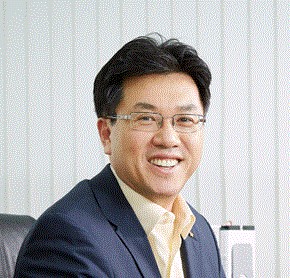 |
The Evolution of Memory Solutions for Cloud era and its ChallengesJong
Hoon Oh (Senior
Vice President / GM, SK Hynix Inc, Korea) Senior
Vice President /GM, DRAM Development & Business |
Abstract
Information Communication Technology has been drastically developed
and evolved. Succeeding mobile era flourished by smartphones,
data-driven applications are expanding and thriving based on the cloud
data centers. It is not merely the increase in the amount of data
traffic, but leads to the transformation from compute-driven
architecture into multiple innovative ones in wide range of cloud
infrastructure. It may include deep learning solution adapted for
emerging artificial intelligence (AI) services, high-performance
computing (HPC) and in-memory solution for big data and emerging
applications. Software-defined infrastructure (SDI) also diversifies
the competitiveness of hardware components into more disaggregated
way. The mutual effect between advanced infrastructure and emerging
smart devices is obvious to contribute prompting new applications. So
far, the enhancement of CPU has driven the progress in the
infrastructure to support wide spectrum of hardware requirements.
However, in the data-driven cloud era, balanced improvement between
processor and memory/storage system becomes more important.
In this talk, we will discuss the challenges that the memory industry
is facing and share the idea for the memory solutions and its advances
to lead memory-centric domain.
Major Achievements
- Designed and Developed World-leading DRAM Products-4M DRAM
(fastest), 16M SDRAM (1st with wave pipelining), 64M RDRAM (direct
ver.), CellularRAM, DDRx, LPDDRx, GDDRx. HBM, etc.
- Industry contribution in Memory Standard development
- Focus on DRAM scaling limit and memory solution development
- Invented / Co-invented 50+ U.S. Patents
Plenary
Talk 3 (25 Jan. 2018)
 |
Information Theory Insights Into Energy Consumption in Wireless NetworksAnders
Host-Madsen (Prof.,
University of Hawaii at Manoa, USA) |
Abstract
Information theory has been fundamental to the development of wireless communications. Results from information theory have been instrumental in increasing capacity of wireless networks. However, in addition to capacity, energy consumption is an important design consideration is wireless networks. It influences battery life of wireless devices, as well as the environment in a not insignificant way. In this talk we will discuss the insights into energy consumption that has been provided by information theory, and how this should influence design of wireless networks and devices. We will show how network topology and constraints on bandwidth and delay affects energy, and which design strategies can be employed to overcome these constraints.
Biography
Anders Host-Madsen was born in Denmark in 1966. He received the M.Sc. degree in engineering in 1990 and the Ph.D. degree in mathematics in 1993, both from the Technical University of Denmark.
From 1993 to 1996 he was with Dantec Measurement Technology A/S, Copenhagen, Denmark, from 1996 to 1998 he was an assistant professor at Kwangju Institute of Science and Technology, Kwangju, Korea, and from 1998 to 2000 an assistant professor at Department of Electrical and Computer Engineering, University of Calgary, Calgary, AB, Canada, and a staff scientist at TRLabs, Calgary. Since 2001 he has been with the Department of Electrical Engineering, University of Hawaii at Manoa, Honolulu, since 2009 as professor. He was also a founder and CTO (2007-2008) of Kai Medical, Inc., which is making equipment for non-contact heart monitoring. His research interests are in statistical signal processing, information theory, and wireless communications, including ad-hoc networks, cooperative diversity, wireless sensor networks, heart monitoring, life detection, and marine mammal signal processing.
He has served as Editor for Multiuser Communications for the IEEE Transactions on Communications and as Associate Editor for Detection and Estimation for the IEEE Transactions on Information Theory. He was general co-chair of ISITA 2012 and IEEE ISIT 2014. He received the Eurasip Journal of Wireless Communications and Networks (JWCN) best paper award in 2006. He is a Fellow of IEEE.